
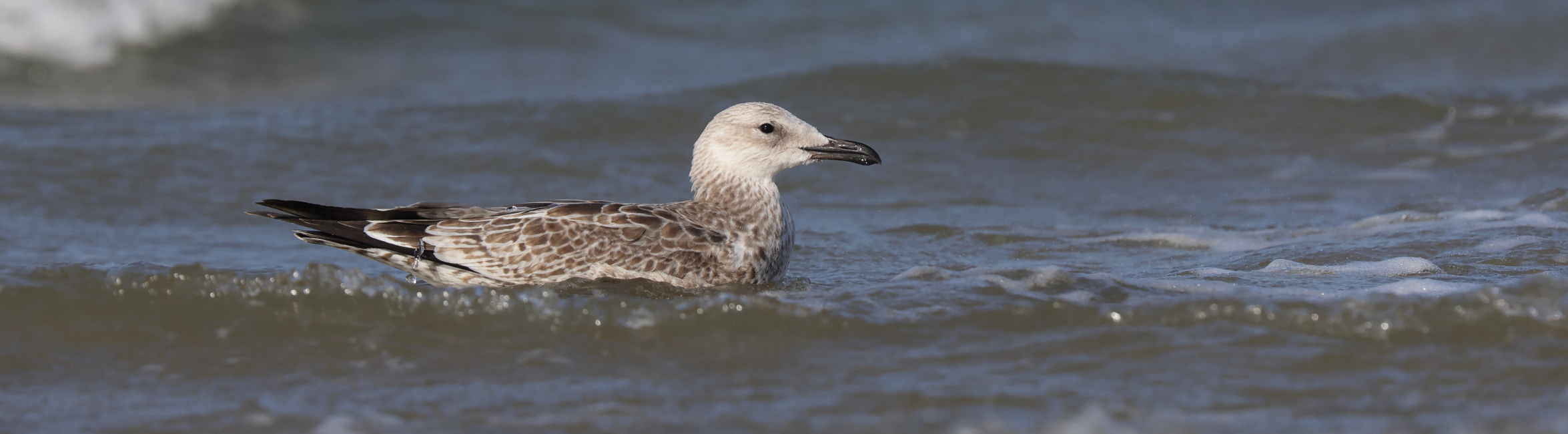
Officially recognised as a species in 2007, it was the publication of the paper by Gibbins, Small & Sweeney (British Birds 2010) that subsequently galvanised popular birding interest in this hitherto ‘cryptic’ gull.
My own appreciation of the species began in the winter of 1998 with the close-to-home, long-staying adult on Eel Pie Island in the Thames. At this time, Caspian (aka Pontic or Eastern Yellow-legged) Gull was treated as a sub-species of Herring Gull. Eventually, I had my first self-found ‘Cachie’, an adult on Dix Pit in October 2004. Further finds followed over several winters of knuckle-numbing roost watches at QE2 Reservoir in Surrey.
In January 2006, Steve Arlow pointed out my first Essex ‘cachie’ at Holland Haven. Steve and I ended up owning half-shares in a battered Land Rover Discovery. This sharabang served as our mobile (and frequently immobile) hide for getting up close and personal with the gulls on Veolia’s Pitsea Landfill. Big thanks were owed to Site Manager ‘Winky’ who kept the gull-wagon going in all weathers, rescuing us from the gaseous tip whenever the car blew a tyre, got stuck in the putrid quagmire or just simply gave up.
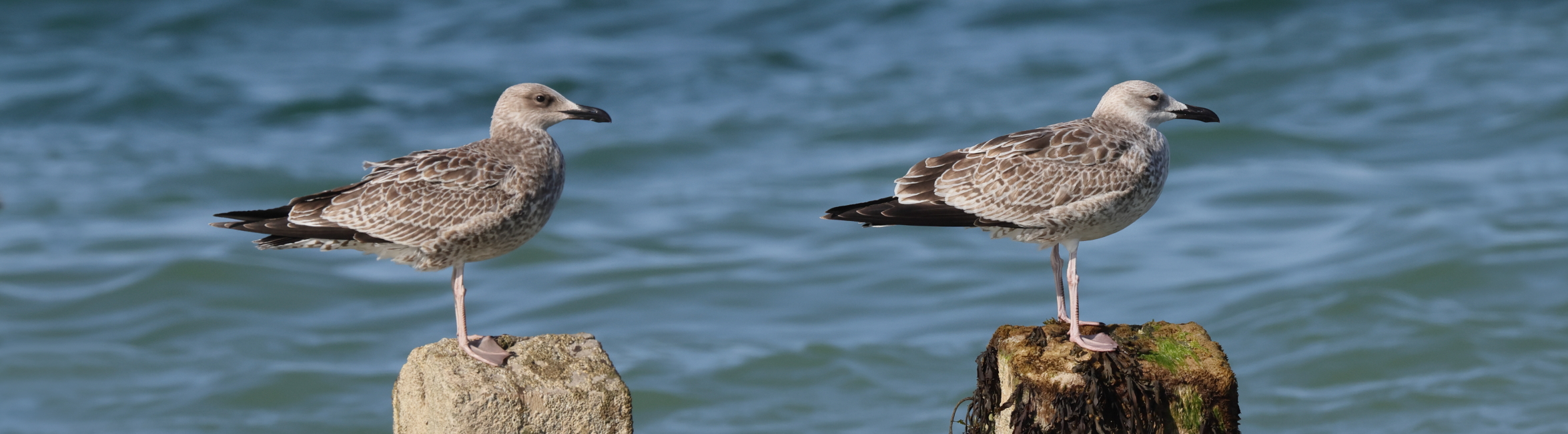
Today, the suite of characters for identifying Caspian Gulls has become fuzzy at the edges. The continued northward and westward march of the species’ breeding range is spawning many hybrids and back-crosses. ‘Cactus’, ‘Cachihellis’, ‘Michinnans’ – and perhaps soon, ‘Cacteus’ – offspring are making the boundaries of sensible identification a real challenge. As with all gull species, the intra-specific variation in structure and plumage alone was enough to wrestle with!
After thirteen years living outside the UK, which yielded very few opportunities to find Caspian Gulls (scores on the door: Qatar 3, Isle of Man 0), it’s been fun to get back to Blighty and to resume the relationship with this boisterous chameleon of a Larin.
In the gallery below, I have endeavoured to remove duplicate individuals from any one day. I have not yet attempted to identify and remove or collate the same individuals across different days. Clearly, individual birds might have been present – and hence photographed – on more than one occasion. In which case, the progression of their moult is something to appreciate.
First calendar year (Juvenile > 1st winter)
Second calendar year (1st winter > 2nd winter)
To be continued …>